

What's on your electricity bill: energy, networks and taxes
In short: your electricity bill adds up several parts. Some depend on the supplier you choose; others are set by the national regulator or by law and are the same for everyone in your country.
This is Part 7. You have seen how the price of energy is formed; now let us see what it becomes at home.
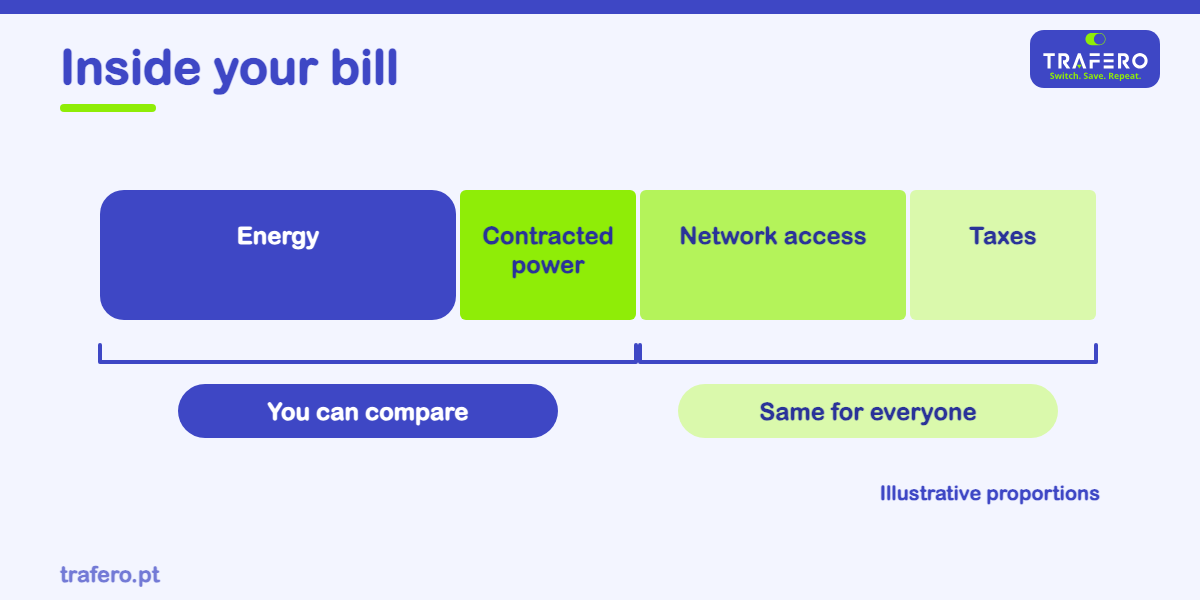
The parts of the bill
- Energy: the price of the electricity you used. It is set by the supplier and changes from offer to offer.
- Contracted power or capacity: a fixed amount that depends on the maximum power you have contracted, in countries that use it (see Part 10).
- Network access: the contribution for using the transmission and distribution networks. These are regulated tariffs, defined by the national regulator.
- Taxes and levies: VAT and other charges set by law, which differ from country to country but are the same for all suppliers in a country.
What are regulated tariffs?
Since there is only one network in each area, it makes no sense to have several competing ones: it would be like two motorways side by side. So the price for using the networks is set by an independent body, the national regulator, and it is the same whichever supplier you have.
Where can I save, then?
Mostly on energy and, where it exists, on contracted power, which depend on the offer and your choices. That is where comparing makes a difference. The regulated parts and the taxes do not change when you switch supplier.