

How electricity prices are formed: the wholesale market
In short: producers sell energy and suppliers buy it on a wholesale market. The price changes with demand, the weather and the cost of fuels.
This is Part 6. You already know who sells you electricity; let us see where the price comes from.
A market like any other
Imagine a fair where some people sell fruit and others buy it. In the electricity market, the sellers are the producers and the buyers are the suppliers (and some large consumers). When demand is high and supply is low, the price goes up; when plenty of energy is available, it goes down.
Buying for tomorrow and for later today
- Day-ahead market: energy is traded for the following day.
- Intraday market: adjustments are made closer to the hour the energy is used.
These organised markets work like "exchanges", where many companies buy and sell. Portugal is part of the Iberian market, shared with Spain.
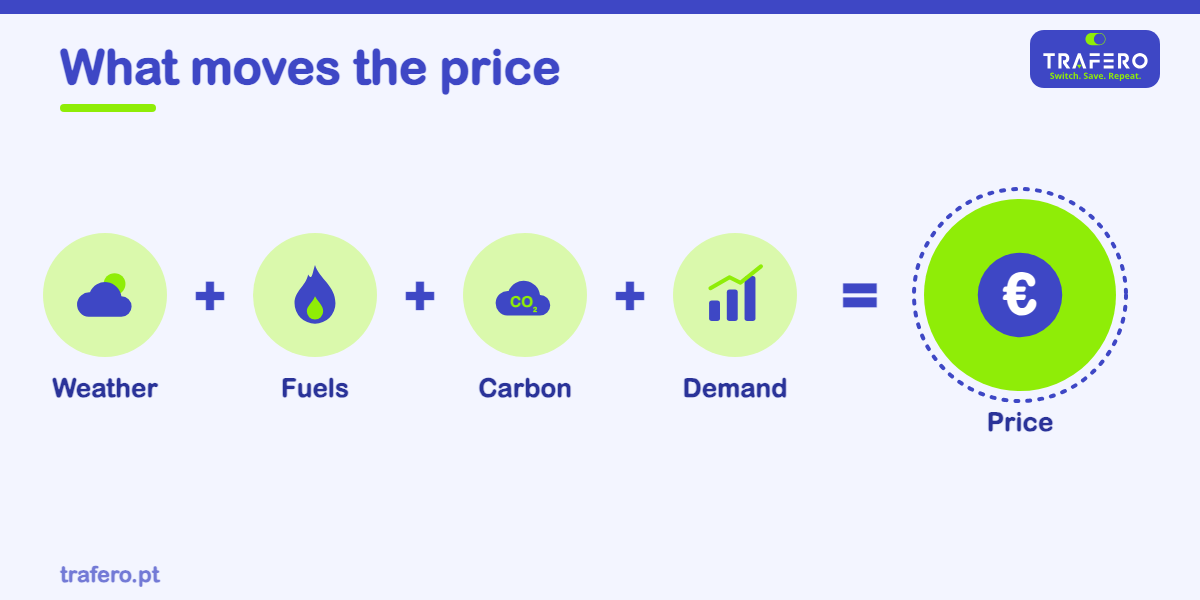
What makes the price go up or down?
- The weather: with lots of sun, wind or rain there is more renewable energy and prices tend to fall.
- Fuels: natural gas and coal affect the cost of thermal power plants.
- Carbon emissions: producing with pollution has a cost.
- Consumption: very cold or very hot days increase demand.
And the price I pay?
What you pay at home is not the market price, but it depends on it. Each supplier creates its own offer and adds other costs. We see which ones in Part 7.