

Contracted power and two-rate tariff: what they are and how to choose
In short: contracted power is the maximum "strength" you can use at the same time; a two-rate tariff has two prices during the day. Choosing well can lower your bill.
This is Part 10, the last in the series. You have seen what is on the bill; now let us look at what you can adjust.
What is contracted power?
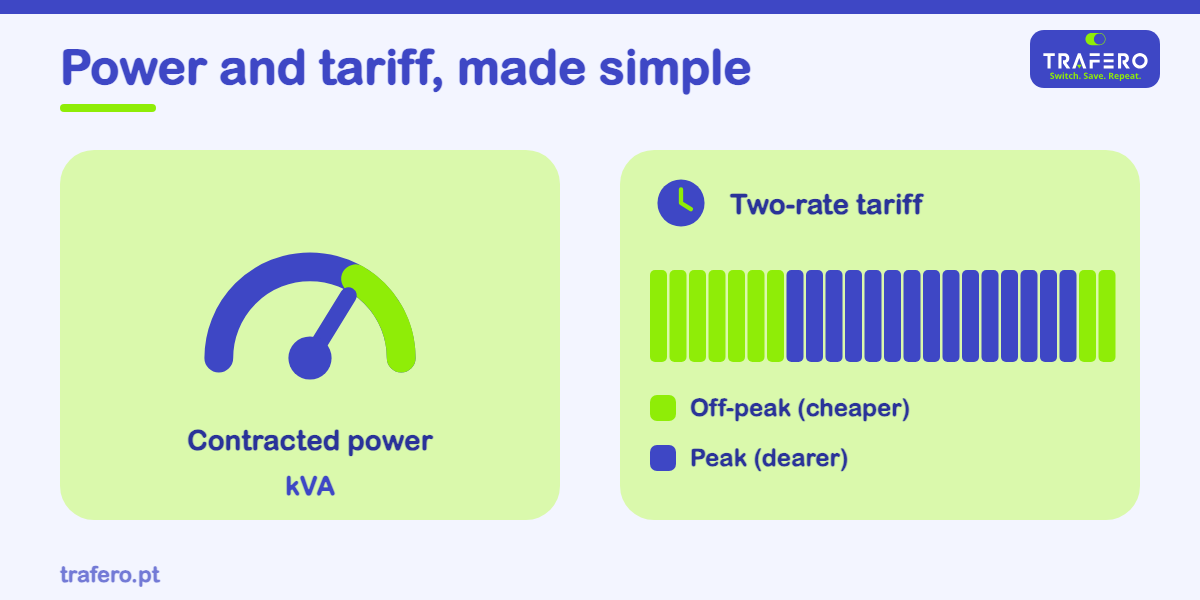
It is the maximum amount of energy you can use at the same time at home, measured in kVA. Think of a water pipe: a bigger pipe lets more water through at once, but costs more. If you switch on many appliances at the same time and the power is low, your electrical panel may "trip". If it is too high, you pay a higher fixed amount you do not need.
Tip: check on your bill how much power you have and think about whether your habits have changed since you contracted it.
Single-rate, two-rate and three-rate tariffs
- Single-rate: the same price at any hour.
- Two-rate: two prices, one cheaper at certain hours ("off-peak") and a dearer one the rest of the time.
- Three-rate: three prices through the day.
The hours depend on the cycle you contract. If you usually run the washing machine, heating or charge an electric car at night or in cheap hours, a two-rate tariff may pay off. If you spend the day at home using energy evenly, single-rate may be better.
How do I know what suits me?
Compare using your real data. A recent bill is enough: use our free simulator and see an estimate. If you have already decided, see how to switch supplier at no cost.