
Where does electricity come from? Generation across the EU explained
In short: electricity can be made from the sun, the wind, water, natural gas, biomass or nuclear power. Each EU country has its own mix, and renewables are growing fast.
This is Part 2 of the series on the electricity market. Here we see where it comes from.
The main energy sources
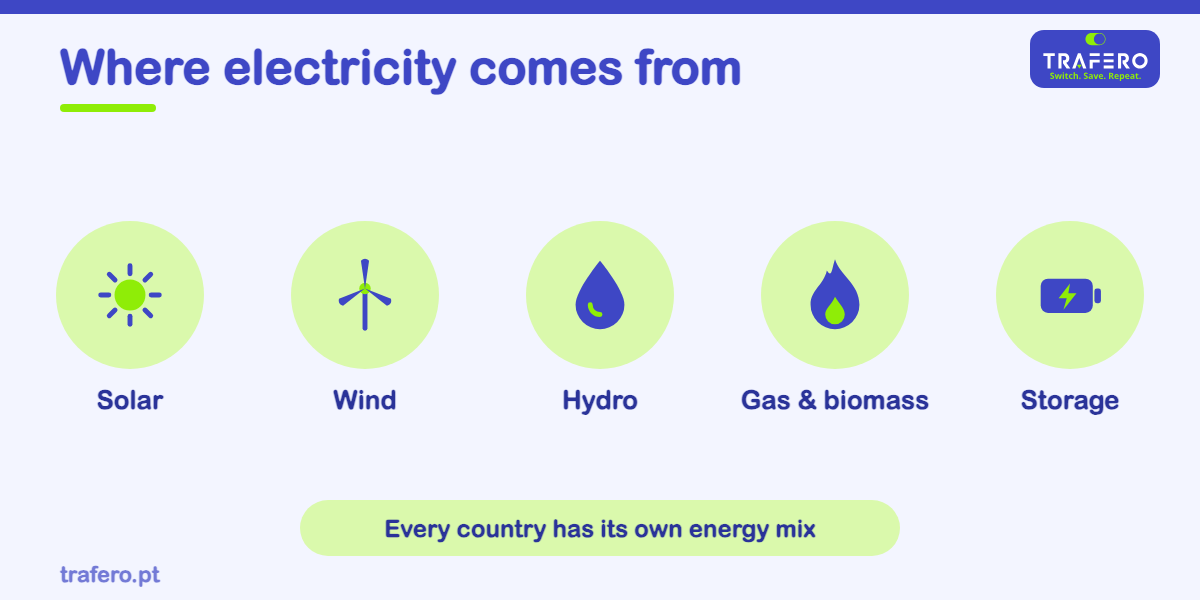
- Solar: photovoltaic panels turn sunlight into electricity.
- Wind: the wind turns the blades of large turbines, on land or at sea.
- Hydro: water from rivers and dams spins machines called turbines.
- Thermal: natural gas, biomass or other fuels are burned to make heat and, with it, electricity.
- Nuclear: the heat of splitting atoms makes steam that spins a turbine. Some EU countries use it, others do not.
- Storage: batteries and other systems keep energy to use later.
Renewables are taking over
According to the European Commission, renewables, mostly solar and wind, supplied 49.9% of the EU's gross electricity consumption in 2025, and the share is expected to pass 60% by 2030. Sun and wind come and go, so the system also needs storage, flexible power plants and consumers who can use more or less energy at the right moments.
Who produces it and how is it sold?
Generation is open to competition. Producers sell the energy on a wholesale market, where suppliers buy it to resell to customers. We explain that market in Part 6.
What if I want to make my own energy?
You can! It is called self-consumption: you install solar panels on your roof and use the energy they produce. When you produce more than you use, you can usually feed the surplus into the grid, under your country's rules. It is a way to cut your bill and use cleaner energy.
Whatever its origin, the electricity that reaches your socket is exactly the same. What changes is how it was produced and how much that cost.