
How the EU electricity market works: a simple guide
In short: the electricity that lights your home goes through five steps. It is generated, transported, distributed, sold and, finally, used by you. In the EU, these steps are linked by one big shared market.
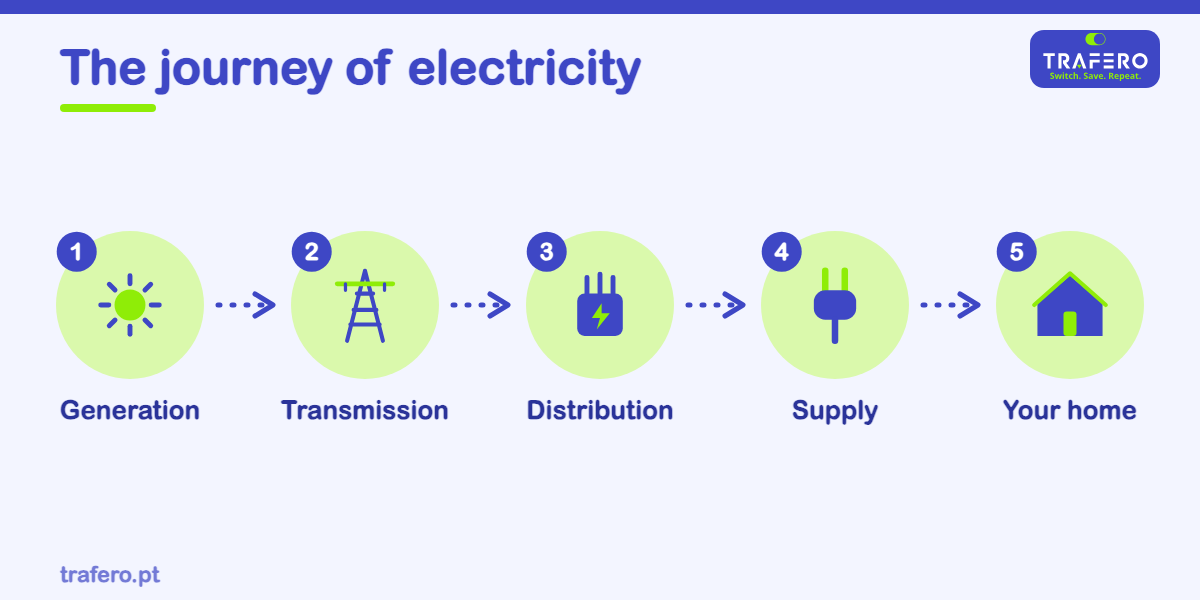
- Generation: places that make energy, such as solar farms, wind farms and dams.
- Transmission: the "motorways" of electricity, for long distances.
- Distribution: the local networks that reach your street and your home.
- Supply: the company that sells you the electricity and sends you the bill.
The journey of electricity, step by step
Think of the water coming out of a tap: it starts at a dam, travels through big pipes, reaches your street and only then enters your home. Electricity is similar. The big difference is that it is hard to store, so it has to be produced at the same time as it is used.
Each step has its own people in charge. Producers make the energy, the transmission network carries it far away, the distribution network delivers it to streets and the supplier sells it to you.
One market for 27 countries
According to the European Commission, the EU has the largest integrated electricity market in the world: 11.3 million km of lines and cables bring electricity to 266 million customers. Shared rules and cross-border grids let power be made in one country and used in another, and the Commission estimates this saves consumers €34 billion a year. Each country still has its own suppliers, grid operators and regulator.
Who can choose a supplier?
Every household in the EU can choose who sells it electricity. You can change supplier whenever you like, but the wires, the meter and the grid stay the same.
What you will learn in this series
In the next parts we explain each step, how the price is formed, what you pay on your bill and how to save. All in simple words, so anyone can follow.